
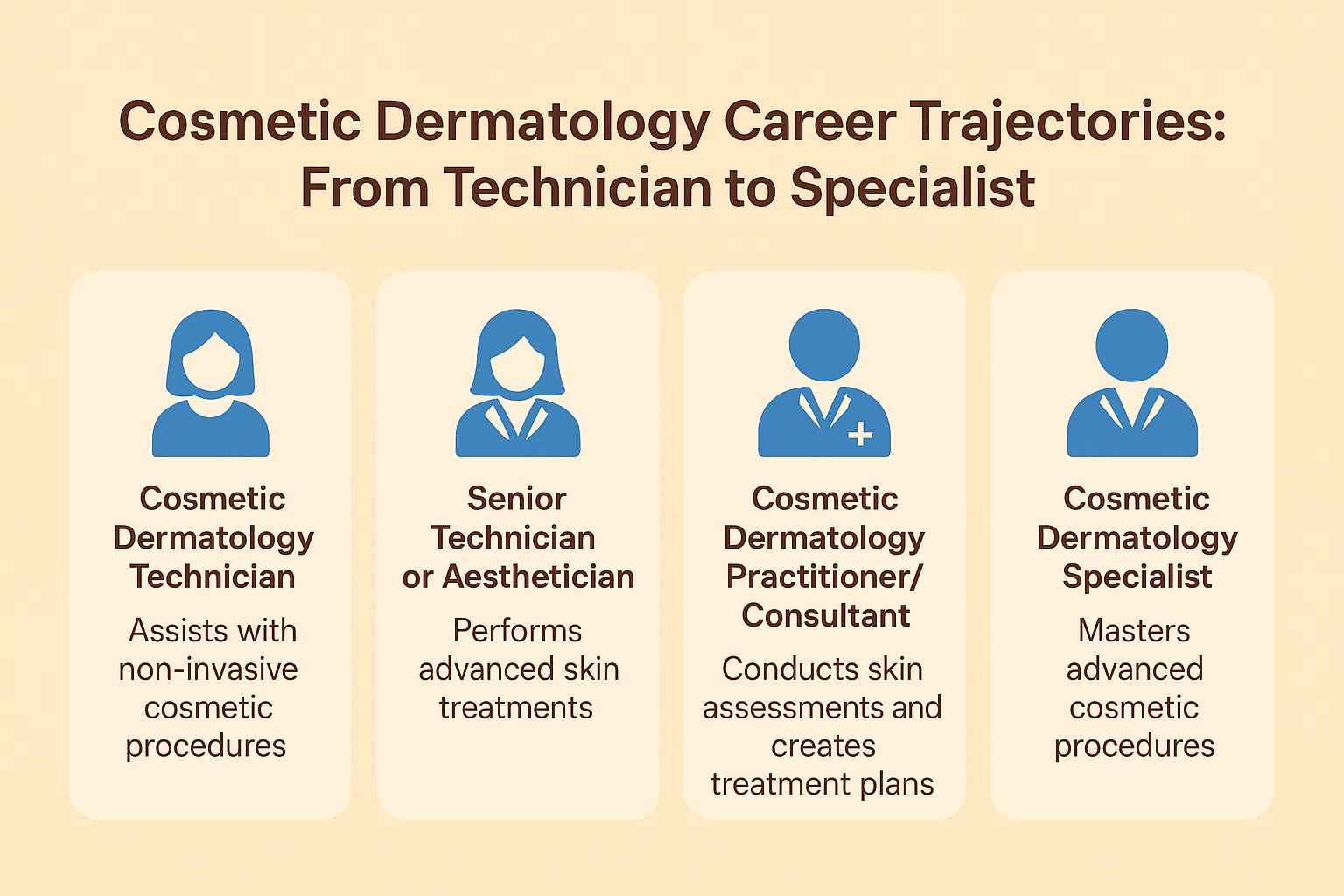
The field of cosmetic dermatology is expanding rapidly, offering a wide range of career opportunities for those passionate about science, skin health, and aesthetic transformation. Whether starting as a technician or aspiring to become a highly specialized expert, understanding the career pathways available helps professionals make informed and confident choices.
Starting Point: Cosmetic Dermatology Technician
Role Overview:
- Assists with non-invasive procedures such as chemical peels and microdermabrasion
- Prepares equipment and clients for treatments
- Ensures cleanliness and adherence to safety protocols
Required Training:
- Completion of a recognized certification program
- Strong foundation in skin anatomy, safety, hygiene, and basic cosmetology principles
Gaining Experience: Senior Technician or Aesthetician
Role Overview:
- Performs advanced treatments (laser therapies, light-based facials, dermaplaning)
- Advises clients on post-procedure care and skincare regimens
- May train junior staff or support with equipment demonstrations
Required Training:
- Extensive hands-on clinical practice
- Advanced coursework in cosmetic dermatology, laser safety, and emerging modalities
Career Advancement: Cosmetic Dermatology Practitioner/Consultant
Role Overview:
- Conducts comprehensive skin assessments and creates treatment plans
- Consults on cosmetic concerns, combining medical insight with aesthetics
- Performs minimally invasive procedures, sometimes under physician supervision
Required Training:
- Formal diploma/degree in cosmetology or dermal therapy
- Specialized clinical cosmetology certifications and advanced training
Specialization: Cosmetic Dermatology Specialist
Role Overview:
- Manages advanced skin concerns (pigmentation, scarring, anti-aging)
- Masters cutting-edge treatments (RF microneedling, injectables, regenerative therapies)
- May lead research, publish findings, or present at industry events
- Often supervises teams or directs clinical practices
Required Training:
- Comprehensive clinical training supported by board-certified cosmetology or dermatology education
- Ongoing professional development and certifications in niche areas
Why Comprehensive Training Matters
Progression from technician to specialist requires dedication to continuous learning, clinical expertise, and hands-on mastery. Structured programs and supervised clinical exposure provide the theoretical knowledge, practical skills, and recognized credentials that help professionals navigate this career ladder with confidence and credibility.
Final Thoughts: Building a Future in Cosmetic Dermatology
Cosmetic dermatology offers a rewarding future where science, artistry, and patient care converge. By setting clear milestones, investing in accredited education, and staying updated with industry innovations, professionals can unlock their full potential and establish themselves as trusted specialists in the evolving field of skin aesthetics.
Information Provided By IBCD
The International Board of Cosmetic Dermatologist (IBDermat) is committed to advancing the practice of aesthetic medicine through expert-led training. Their Cosmetic Dermatology Course equips aspiring and experienced professionals with the knowledge, clinical skills, and certification needed to thrive in today’s competitive cosmetic dermatology landscape.